Starting a mixed-use property development project is exciting. However, it is also complex. You are combining residential, commercial, and sometimes industrial spaces into one development. Without a solid business plan, even the best project idea can fall apart. A well-written business plan gives you direction, attracts investors, and helps you avoid costly mistakes.
This guide walks you through every key section of a real estate business plan for mixed-use property development. Whether you are a first-time developer or an experienced investor expanding your portfolio, this article will help you build a plan that works.
What Is a Mixed-Use Property Development?
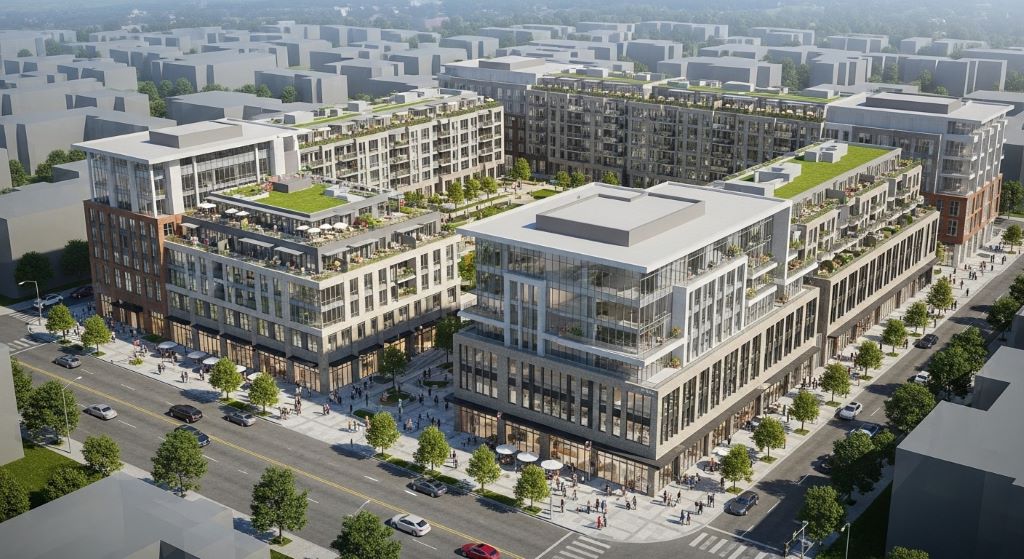
A mixed-use development combines two or more types of real estate uses in one project. For example, a building might have retail shops on the ground floor, offices on the middle floors, and apartments on the upper floors. This type of development has grown in popularity across urban and suburban markets.
Mixed-use properties offer several advantages. They attract diverse income streams from multiple tenant types. They also tend to be more resilient during economic downturns because different sectors do not always decline at the same time. Additionally, they support walkable communities, which makes them increasingly attractive to city planners and local governments.
However, mixed-use developments are more complicated to plan, finance, and manage than single-use properties. Therefore, a detailed business plan is not optional. It is essential.
Why You Need a Business Plan Before You Begin
Many developers skip the business plan and jump straight to site acquisition. This is a common and costly mistake. A business plan forces you to think critically about every aspect of your project before you spend a dollar.
It also serves practical purposes. Lenders require a business plan before approving financing. Investors want to see one before committing capital. Local authorities may also ask for one during the permitting and zoning approval process.
Furthermore, a business plan gives you a benchmark. Once the project is underway, you can compare actual performance against your original projections. This helps you identify problems early and make adjustments quickly.
Step One: Write a Clear Executive Summary
The executive summary is the first section of your business plan. However, it is usually written last. It provides a snapshot of your entire plan in one to two pages.
Your executive summary should cover the following:
- The name and location of the development project
- The types of uses included, such as residential, retail, or office space
- The total project size and estimated budget
- Your target market and expected demand
- Projected revenue and return on investment
- A brief overview of your development team
Keep it concise. Most investors and lenders read the executive summary first. If it does not grab their attention, they may not read the rest of the plan. Therefore, make every sentence count.
Step Two: Define Your Business and Development Goals
After the executive summary, provide a full description of your business and the specific project. This section answers the question: what exactly are you building and why?
Start with your company profile. Include your legal structure, years in operation, past projects, and core competencies. If you are a new developer, explain what relevant experience and qualifications you bring to the table.
Then describe the project in detail. Explain the specific mix of uses you have chosen and why that combination makes sense for the location. For instance, if you are developing in a transit-rich urban neighborhood, a mix of apartments and ground-floor retail may serve commuters and residents well.
Additionally, state your short-term and long-term goals. Short-term goals might include securing financing, completing due diligence, and breaking ground by a specific date. Long-term goals might include achieving stabilized occupancy, refinancing, or eventually selling the asset at a profit.
Step Three: Conduct a Thorough Market Analysis
A market analysis is the foundation of your business plan. It shows that you understand the local market and that there is genuine demand for your project.
Analyze the Local Real Estate Market
Start by researching the broader market in your target area. Look at population growth trends, employment rates, income levels, and housing demand. These indicators tell you whether the market is growing or contracting. A growing market with rising demand is a much safer environment for development.
Next, zoom into your specific submarket. Study vacancy rates for each type of use you plan to include. For example, if your development includes office space, what is the current office vacancy rate in that neighborhood? If it is already high, adding more office supply may not be wise.
Study Your Competition
Identify competing mixed-use developments in your target area. Analyze their tenant mix, occupancy rates, rental rates, and amenities. Understanding what competitors offer helps you position your project more effectively.
Look for gaps in the market. Perhaps there is strong demand for medical office space in the area but limited supply. Or perhaps residents are underserved by quality grocery stores. Your project can fill those gaps, giving it a competitive edge.
Identify Your Target Tenants and Buyers
Different uses attract different tenants. Retail tenants care about foot traffic, parking, and visibility. Residential tenants care about safety, amenities, and proximity to transit. Office tenants care about floor plate sizes, technology infrastructure, and building image.
Therefore, build a profile for each tenant type you are targeting. This helps you design the spaces appropriately and market them effectively once the project is complete.

Step Four: Outline Your Development Strategy
This section describes how you plan to execute the project from start to finish. It is one of the most important parts of your business plan.
Site Selection and Acquisition
If you have already identified a site, describe it in detail. Include the address, lot size, current zoning, and any known environmental or title issues. Explain why this location is ideal for a mixed-use development.
If you have not yet acquired the site, describe your criteria for selection. Explain how you will evaluate potential sites and what your acquisition timeline looks like.
Zoning and Entitlements
Mixed-use developments often require special zoning approvals. Describe the current zoning status of the site and any variances or conditional use permits you will need. Outline your strategy for working with local planning authorities to secure approvals.
This part of the plan should also address community engagement. Many mixed-use projects face opposition from neighbors or advocacy groups. A proactive community engagement strategy can reduce delays and improve the final project design.
Design and Construction
Describe your planned approach to design and construction. Will you hire an architect and general contractor separately, or will you use a design-build firm? What are your key design priorities, such as sustainability, accessibility, or historic preservation?
Include a realistic construction timeline with key milestones. Most mixed-use developments take two to five years from site acquisition to stabilized occupancy. Breaking the timeline into phases, such as pre-development, construction, and lease-up, makes it easier to manage and monitor.
Step Five: Build a Detailed Financial Plan
The financial section is where your business plan either wins or loses the confidence of lenders and investors. It must be thorough, realistic, and based on verifiable data.
Project Costs
List all anticipated project costs. These typically include:
- Land acquisition cost
- Hard construction costs, including labor and materials
- Soft costs, such as architectural fees, engineering, legal, and permits
- Financing costs, including loan origination fees and interest during construction
- Contingency reserves, typically 10 to 15 percent of hard costs
- Marketing and lease-up costs
Be conservative with your estimates. Construction costs have risen significantly in recent years. Additionally, unforeseen site conditions, design changes, and permitting delays can add to the budget. A well-funded contingency reserve protects your project when the unexpected happens.
Revenue Projections
Project your revenue for each type of use in the development. For residential units, estimate monthly rents based on comparable properties in the area. For retail and office spaces, estimate annual rents per square foot. If you plan to sell residential condominiums rather than rent them, project your sales revenue and absorption rate.
Be realistic. Avoid optimistic projections that assume 100 percent occupancy from day one. Most developments experience a lease-up period of six to eighteen months before reaching stabilized occupancy. Factor this into your projections.
Financing Structure
Describe how you plan to finance the project. Most mixed-use developments use a combination of equity and debt. Common financing sources include:
- Construction loans from commercial banks or credit unions
- Equity contributions from the developer and co-investors
- Mezzanine financing or preferred equity from private lenders
- Government programs, such as tax increment financing or low-income housing tax credits
Clearly state how much capital you are seeking, how it will be used, and what return investors can expect. Lenders and investors appreciate transparency. Therefore, do not hide risks or inflate projections to make the deal look better than it is.
Return on Investment Analysis
Include a return on investment analysis for your target investors. Key metrics to include are net operating income, capitalization rate, internal rate of return, and equity multiple. These figures allow sophisticated investors to evaluate your project quickly and compare it to other investment opportunities.
Step Six: Present Your Management and Operations Plan
A great development team inspires confidence. This section introduces the people behind the project and explains how the property will be managed once it is complete.
Introduce your key team members. Include your development manager, architect, general contractor, legal counsel, and financial advisor. Highlight relevant experience, particularly on similar mixed-use projects.
Additionally, describe your property management strategy. Will you manage the property in-house or hire a third-party property management firm? For mixed-use projects, management is more complex because you are dealing with different lease structures and tenant types simultaneously. A clear management plan reassures investors that the asset will be well-maintained and profitable over the long term.
Step Seven: Address Risk and Mitigation Strategies
Every development project carries risk. Acknowledging this in your business plan actually builds credibility. It shows that you have thought carefully about what could go wrong and how you will respond.
Common risks in mixed-use development include:
- Construction cost overruns and delays
- Changes in zoning or regulatory requirements
- Market softness leading to lower-than-projected rents or occupancy
- Rising interest rates increasing financing costs
- Tenant default or difficulty attracting anchor tenants
For each risk, describe your mitigation strategy. For example, a fixed-price construction contract reduces the risk of cost overruns. Pre-leasing agreements with anchor tenants reduce market risk. Building in a financing contingency protects against interest rate changes.
Conclusion
A real estate business plan for mixed-use property development is more than a document. It is a roadmap that guides your project from concept to completion. It helps you secure financing, build a strong team, understand your market, and manage risks effectively.
Start with a compelling executive summary. Then work through each section carefully: your development goals, market analysis, development strategy, financial projections, management plan, and risk mitigation approach. Each section builds on the last. Together, they create a complete picture of your project.
The mixed-use sector continues to grow. Developers who combine smart planning with disciplined execution are well-positioned to succeed. Therefore, invest the time to write a thorough business plan. It is one of the most valuable things you can do before breaking ground.
Frequently Asked Questions
What makes a mixed-use development different from a standard real estate project?
A mixed-use development combines two or more types of real estate uses, such as residential, retail, office, or hospitality, within a single project or building. This creates more complexity in planning, financing, and management compared to single-use developments. However, it also creates more diverse income streams and can be more resilient during economic downturns.
How much does it cost to develop a mixed-use property?
Costs vary widely depending on the location, scale, and type of project. A small urban infill project might cost a few million dollars, while a large mixed-use campus can run into hundreds of millions. Key cost drivers include land prices, construction costs per square foot, soft costs, and financing expenses. Always include a contingency reserve of at least 10 to 15 percent of hard costs.
How do I find investors for a mixed-use development project?
Start with your professional network, including real estate attorneys, accountants, and other developers. Additionally, consider approaching private equity firms, family offices, and real estate syndicators. A well-prepared business plan is essential for attracting investor interest. Crowdfunding platforms focused on real estate are also a growing source of capital for development projects.
What zoning approvals are typically needed for mixed-use developments?
Requirements vary by jurisdiction. Many municipalities have specific mixed-use zoning categories, while others require a conditional use permit or planned unit development approval. Some projects need variances for height, density, or parking. Engaging a local land use attorney and planning consultant early in the process can help you navigate these requirements efficiently.
How long does it take to develop a mixed-use property from start to finish?
Most mixed-use developments take between two and five years from site acquisition to stabilized occupancy. The pre-development phase, which includes due diligence, design, and entitlements, often takes twelve to twenty-four months. Construction typically takes another twelve to thirty-six months depending on project size. After construction, allow six to eighteen months for lease-up before the property reaches its stabilized occupancy rate.
Related Topics:
Best real estate business ideas for them who want to make it profitable
What is a Tie-In Agreement in Real Estate