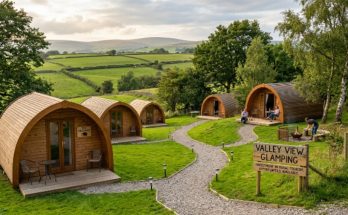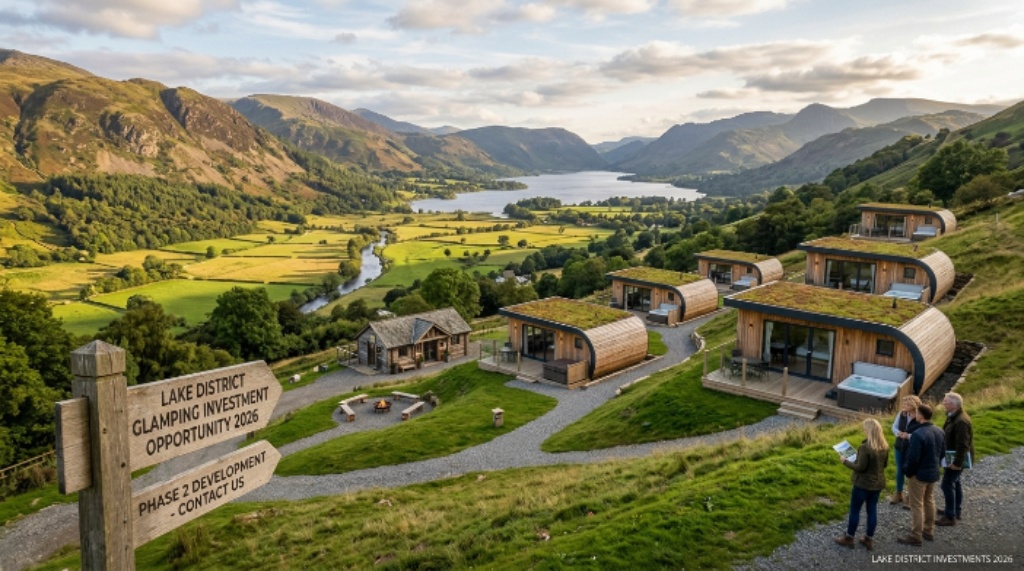
The UK staycation boom did not fade when international travel reopened. It evolved. Millions of British holidaymakers discovered that camping and glamping offered something foreign holidays could not: fresh air, open space, and the kind of slow pace that hotel rooms rarely deliver. That shift in taste has quietly created one of the most compelling rural land investment opportunities in the country.
Smart investors are paying attention. From the cliff-top fields of Cornwall to the valley floors of the Lake District, camping land is changing hands at pace, and those who buy strategically are building income-producing assets in some of the most beautiful and consistently visited regions of England.
This guide explains where to look, what to pay, what returns are realistic, and what every buyer needs to understand before they sign.
Why Camping Land Has Become a Serious Investment Asset
More than half of the UK population visits a campsite at least once a year. Waiting lists for popular caravan and camping pitches, particularly at coastal locations, are well documented. The campsite market has simply not kept pace with demand, and that gap creates opportunity for new operators and existing landowners willing to develop.
At the same time, the glamping sector has matured into a high-value extension of the camping market. A well-positioned pod or cabin on the right piece of land can generate nightly rates that rival boutique hotel rooms, with operating costs far below a traditional hospitality business.
According to current market data, there are around ten dedicated camping land properties on the open market in the UK at any given time, listed at an average of approximately £845,000, with each acre priced at around £193,000. That figure represents land with consented campsite use. Unconsented agricultural land in the same regions sells for far less, giving buyers who can navigate the planning process a meaningful value creation opportunity and a clear strategy for how to fix retained earnings over time.
The UK glamping market is forecast to grow at a compound annual growth rate of 9 to 11 percent through 2030 under base-case projections. The upside scenario pushes that figure toward 14 percent. Those numbers reflect a sector driven by structural demand, limited supply, and a guest base that keeps returning year after year.
The Key Investment Regions and What Sets Them Apart
Not all camping land carries the same commercial potential. Location drives occupancy, and occupancy drives returns. The following regions consistently outperform the national average.
| Region | Key Strength | Typical Occupancy Profile |
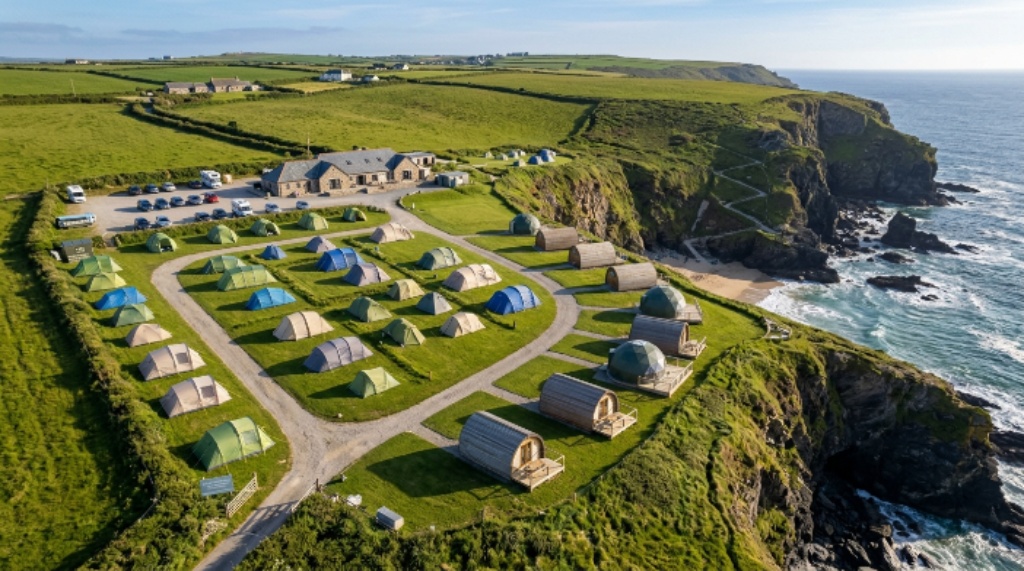
| Cornwall | Coastal views, long season, strong brand recognition | High summer, growing shoulder season |
| Lake District | Year-round outdoor tourism, natural beauty | Strong spring to autumn, winter weekends |
| Devon | Family market, diverse landscapes | Long summer season, steady demand |
| Yorkshire Dales | Walking and cycling tourism, lower entry prices | Peak spring and summer |
| Northumberland | Low site density, rising visitor numbers | Fastest-growing new-entry ROI |
| Somerset and Dorset | Rolling countryside, proximity to South West | Strong summer, events-linked demand |
| Cotswolds | Premium guest profile, high ADR potential | Year-round appeal, strong repeat bookings |
| Scottish Highlands | Wild camping culture, eco-tourism growth | Short but high-value season |
Cornwall and the Lake District sit at the top of every established operator’s ranking. Sites in both regions achieve higher occupancy rates and command premium nightly rates, particularly across the summer months. However, this maturity comes with a caveat. Both regions are competitive. Brand positioning, site design, and guest experience need to be genuinely strong to stand out.
Therefore, buyers entering Cornwall or the Lake District for the first time should budget for quality from day one. A mid-tier offering in either region will struggle. A well-designed, experience-led site will perform well above the national average.
What Returns Look Like in Practice
A £35,000 glamping pod in a well-chosen location can typically achieve payback within 25 to 30 months under average market conditions. That calculation assumes a nightly rate of around £160 and occupancy of 60 to 65 percent. New sites commonly open at 35 to 50 percent occupancy in year one, then build to 55 to 75 percent as reviews, direct bookings, and repeat guests accumulate.
Small sites with just two to four units keep overheads low and offer an accessible entry point. Mid-size sites with six to twelve units allow operators to diversify their accommodation mix, add premium features such as hot tubs, outdoor kitchens, and curated experiences, and drive higher average daily rates.
Feasibility studies from operators across the UK suggest that sites achieving 50 percent occupancy at nightly rates of £100 to £150 recover their initial investment within two to three years. For sites in prime coastal or National Park locations commanding rates of £175 to £250 per night, the payback period can be shorter.
At a portfolio level, the pitch fee model for traditional campsites also remains attractive. Running costs for tent and caravan sites are relatively low. Utilities and facilities are covered through pitch fees, creating a revenue-light operating model that suits investors who do not want to run a hospitality business day-to-day.
The Planning Permission Reality
Planning is where many camping land investments succeed or fail. It pays to understand the rules before you buy.
Commercial holiday letting from any structure placed on land for paying guests constitutes a material change of use. This applies regardless of whether the structure is a fixed pod, a shepherd’s hut, a treehouse, or a bell tent on a permanent base. If you operate for more than 28 days a year, you are almost certainly running a business that requires full planning permission.
Agricultural land in particular needs careful planning input when being converted to tourism accommodation use. Any access roads, parking areas, utility connections, and amenity buildings associated with a glamping site typically also require permission, even when the accommodation units themselves might not.
The good news is that planning approval, once secured, adds significant value to the land. Consented camping land sells at a meaningful premium over agricultural land in the same area. Buying unconsented agricultural land in a high-demand location and securing planning permission yourself can therefore create substantial equity before a single guest arrives.
Local planning authorities in National Park regions such as the Lake District and Dartmoor apply additional scrutiny to development proposals. However, well-designed, low-impact sites with strong ecological credentials and a genuine connection to the landscape tend to perform better in the planning process than generic development proposals.
Additionally, England introduced new Biodiversity Net Gain rules that now apply to most planning applications. These rules require developments to demonstrate a measurable improvement in biodiversity compared to the pre-development baseline. Sites that build this into their design from the start have a planning advantage. Sites that treat it as an afterthought face delays and additional cost.
Growth Regions Worth Watching
While Cornwall, Devon, and the Lake District dominate the headlines, smart investors are increasingly looking at regions where site density is still low and visitor numbers are rising.
Northumberland offers some of the best new-entry returns in England right now. Visitor numbers have grown consistently over recent years, the landscape is spectacular, and established glamping sites remain relatively scarce compared to the South West. Land prices are lower, planning competition is lighter, and the occupancy ceiling is still some way above where new sites are currently operating.
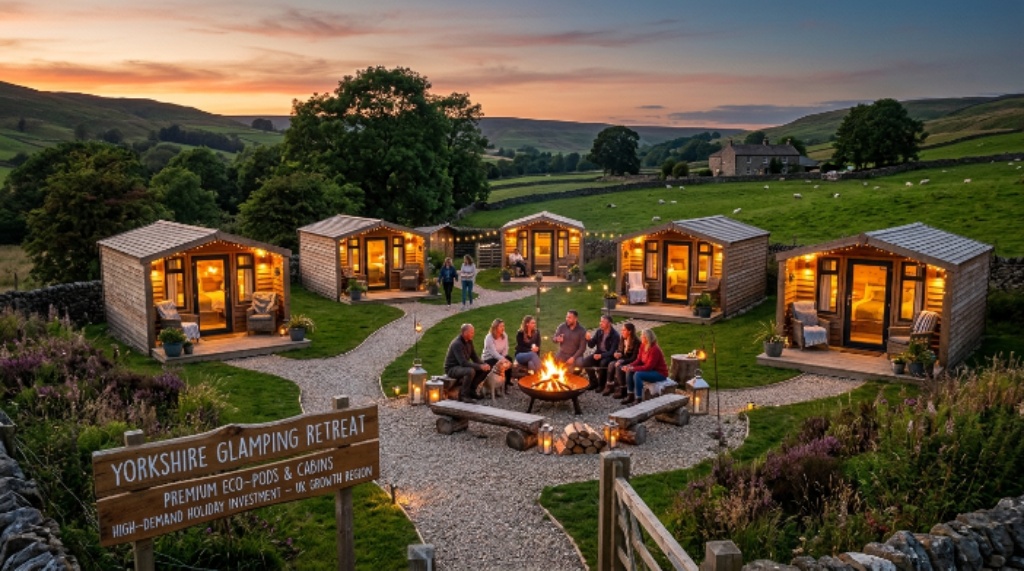
Yorkshire combines a huge domestic visitor market, strong walking and cycling culture, and a wide range of land types from moorland to riverside to farmland. Entry prices remain more competitive than the South West, and the region has a well-established rural tourism infrastructure.
Lincolnshire and the East Midlands offer the most affordable entry points of any region with meaningful visitor demand. These are not headline destinations, but they are accessible to large urban populations and increasingly attractive to short-break travelers seeking alternatives to overcrowded hotspots.
What Smart Buyers Do Differently
The investors generating the best returns from camping land in 2026 share a consistent set of behaviours.
- They identify land with planning potential before it comes to market, often through land agents or direct approaches to landowners.
- They commission a feasibility study before making an offer, covering planning prospects, site suitability, access, utilities, and realistic revenue projections.
- They engage a planning consultant at the earliest stage, before spending money on surveys or site design.
- They design for the guest experience from the start, not as an afterthought. Location matters enormously, but the site design determines whether guests return and recommend.
- They build direct booking capability alongside listing on platforms like Canopy and Stars or Wigwam Holidays, to avoid permanent dependency on commission-based channels.
- They choose regions where demand is strong but supply has not yet caught up, rather than chasing the most famous locations where competition is already intense.
Conclusion
Camping land investment across England has moved firmly into the mainstream. From Cornwall to the Lake District, demand for outdoor stays continues to outpace supply, and the gap between what tourists want and what currently exists on the ground represents a durable commercial opportunity. Established regions offer strong occupancy and premium nightly rates, while growth counties such as Northumberland and Yorkshire offer lower entry prices and faster paths to market leadership. Planning permission is the critical gating factor. Buyers who understand the process, design sensitively, and engage with local authorities early gain a genuine competitive advantage. A well-planned site with two to six units, priced for its location and designed for the guest it wants to attract, can recover its investment in under three years and generate reliable income for a decade beyond that. The smart investors are already in the market. The question is whether you will join them before the best sites are gone.
Frequently Asked Questions
Do I need planning permission to run a camping or glamping business on agricultural land in England?
Yes, in almost all cases. Running any commercial holiday letting operation on agricultural land constitutes a material change of use and requires planning permission. This applies regardless of the structure type, whether a fixed pod, a shepherd’s hut, or a bell tent on a permanent base. Operating for more than 28 days per year is considered a commercial activity. Engaging a planning consultant before purchasing land is strongly recommended.
Which UK regions offer the best returns for camping land investors?
Cornwall, the Lake District, Devon, and the Cotswolds consistently achieve the highest nightly rates and occupancy figures, making them the strongest performers for established investors. However, Northumberland, Yorkshire, and Lincolnshire currently offer the best new-entry returns, combining lower land prices, rising visitor demand, and lower competition from existing operators.
How much can a glamping site earn in the UK?
Returns vary significantly by region, site size, accommodation type, and occupancy level. A single glamping pod priced at around £160 per night and achieving 60 to 65 percent occupancy can typically repay its £35,000 purchase cost within 25 to 30 months. Sites in premium coastal or National Park locations charging £175 to £250 per night can achieve payback more quickly. Most new sites operate at 35 to 50 percent occupancy in year one, rising to 55 to 75 percent as the business matures.
What is the difference between buying consented camping land and agricultural land?
Consented camping land already has planning permission for campsite use in place. It is ready to operate or develop without going through the planning process. Agricultural land does not carry that permission and must go through the change-of-use process before commercial camping can begin. Consented land commands a significant price premium but removes planning risk. Agricultural land with strong planning potential can offer better value for investors who understand the planning process and are willing to invest the time and professional costs required to secure consent.
How do I find camping land for sale in the UK?
Dedicated land listing platforms such as LandSale and UK Land and Farms regularly list camping and glamping land alongside agricultural land with tourism development potential. Specialist rural property agents including Carter Jonas, Savills Rural, and Knight Frank cover the main regions. Additionally, direct approaches to landowners in target areas, facilitated through rural property solicitors or land agents, can surface opportunities before they reach the open market.