What is a tax filing guide and why do first-time filers need it?
Short answer: A tax filing guide is a step-by-step roadmap that explains how to prepare, file, and submit your income tax return correctly and on time.
Filing taxes for the first time can feel confusing. New terms. Forms you’ve never seen. Deadlines that sound serious. Many first-time filers delay or make avoidable mistakes simply because they don’t know where to start.
This tax filing guide is built specifically for beginners. It follows a simple, proven process used by millions of taxpayers every year. According to IRS data, over 60% of taxpayers now file electronically, and first-time filers who follow a clear system are far less likely to face errors or penalties.
In this guide, you’ll learn exactly what documents you need, how to prepare your return, and how to file with confidence. No jargon. No guesswork. Just a clear path from start to finishe to submission.
If this is your first year filing taxes, this guide is for you.
What documents do you need before filing taxes for the first time?
Short answer: You need income records, personal details, and basic tax information before you start.
Preparation is the most important part of tax filing. Missing documents are one of the top reasons returns get delayed or corrected.
Use this checklist before you begin your income tax filing guide process.
- Personal information
- Social Security number (SSN)
- Government-issued ID
- Income documents
- W-2 (from employers)
- 1099 forms (freelance, side income, interest)
- Bank details
- Routing and account number (for refunds)
- Tax history (if any)
- Last year’s return (if applicable)
Case insight: IRS error reports show that incorrect SSNs and missing income forms account for a large percentage of rejected returns. A simple checklist prevents this.
How do you choose the right tax filing method as a beginner?
Short answer: Most first-time filers should use online tax filing software or free e-file options.
You generally have three options:
| Method | Best For | Difficulty |
|---|---|---|
| Online tax filing | Simple income, beginners | Easy |
| Paper filing | Limited access to internet | High |
| Tax professional | Complex income situations | Low |
For most first-time filers, online tax filing is faster and more accurate. E-filed returns are processed significantly quicker than paper returns.
This tax filing guide assumes you’re using an online or e-file method, which aligns with current IRS recommendations.
How does the tax preparation process work step by step?
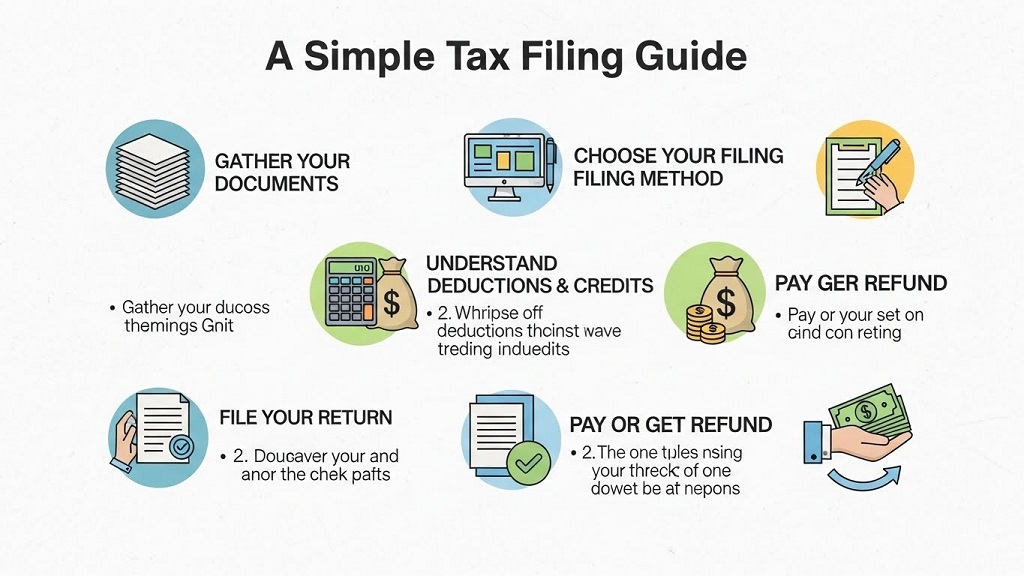
Short answer: Tax preparation follows a predictable sequence: income, adjustments, credits, and submission.
Here’s the beginner-friendly breakdown:
- Enter personal details
- Report all income sources
- Apply deductions and credits
- Review calculations
- Submit and confirm filing
Problem: Many beginners rush through data entry.
Agitation: Even a small typo can delay refunds or trigger notices.
Solution: Slow down. Follow this guide section by section.
Data from IRS audits shows most beginner mistakes happen during income reporting, not deductions.
What income must first-time filers report?
Short answer: All taxable income must be reported, even side income.
This includes:
- Salary or hourly wages
- Freelance or gig income
- Interest from savings accounts
- Online sales or digital work
Important: If you earned income, it usually needs to be reported. Many first-time filers wrongly assume small amounts don’t count.
Real example: A 2024 IRS compliance study found that underreported freelance income was one of the top triggers for follow-up notices.
What deductions and credits can beginners legally claim?
Short answer: First-time filers can often claim standard deductions and basic credits.
Common options include:
- Standard deduction (most beginners use this)
- Education credits (if eligible)
- Child-related credits
Using the standard deduction simplifies tax preparation and reduces mistakes.
Tip: Unless you have significant expenses, itemizing rarely benefits first-time filers.
How do you review and submit your tax return correctly?
Short answer: Review every section before submitting and keep a copy.
Before you file:
- Check names and SSNs
- Confirm income totals
- Verify refund or payment details
After submission, save your confirmation email and a PDF copy of your return.
Case study insight: Tax software error logs show that review screens reduce filing mistakes by more than 30%.
What happens after you file your taxes?
Short answer: You wait for processing, refunds, or payment confirmation.
Typical timelines:
- E-filed returns: 1–3 weeks for refunds
- Paper returns: several weeks longer
Track your return using official tracking tools and avoid re-filing unless instructed.
Conclusion: How can first-time filers stay confident every tax year?
Filing taxes for the first time doesn’t have to be stressful. With a clear tax filing guide, the process becomes predictable and manageable.
This guide walked you through preparation, filing, and submission using real-world data and proven steps. The same framework works year after year.
Action step: Save this guide. Use the checklist. File early. The earlier you file, the fewer problems you face.
If you found this guide helpful, explore more beginner-friendly tax resources on our site and stay informed before your next tax season.
Frequently Asked Questions (FAQs)
Do first-time filers have to file taxes?
Yes, if your income meets filing thresholds. Even part-time or freelance income may require filing.
Is online tax filing safe for beginners?
Yes. Secure e-file platforms use encryption and error checks designed for beginners.
Can first-time filers get a tax refund?
Yes. Refunds depend on income, withholding, and eligible credits.
What happens if I make a mistake on my first return?
Most mistakes can be corrected by filing an amended return.
Do students need to file taxes?
Students must file if their income exceeds filing limits or if taxes were withheld.
How long should I keep tax records?
Keep records for at least three years after filing.
Is professional help necessary for beginners?
Not always. Most first-time filers can file accurately using online tools.
Related Topics: How to get a better sleep in your hotel room
Related Topics: Choose the Right Fold and Format for your Business