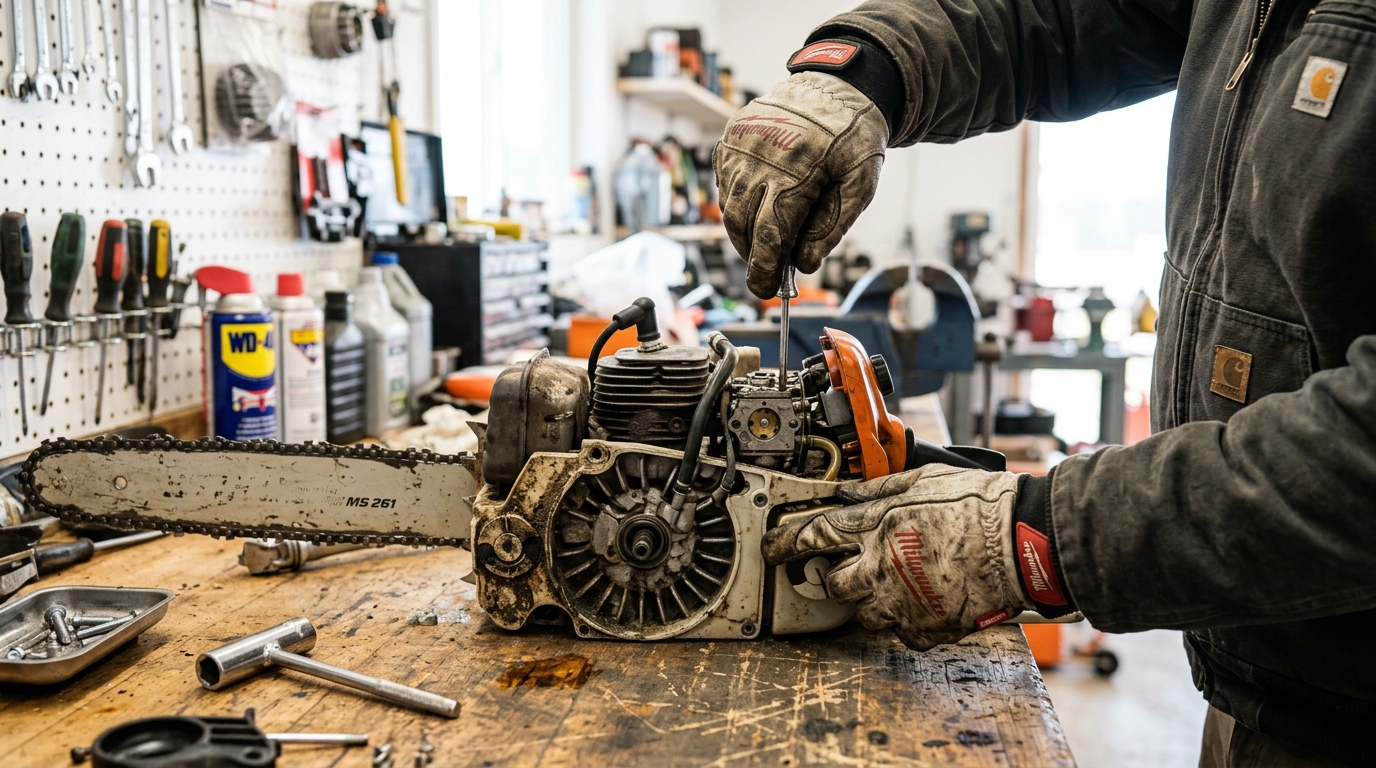
You pull the starter cord, expecting that familiar roar, but the engine just sputters and dies. Or maybe it starts fine but the chain refuses to spin. A chainsaw that won’t cooperate can turn a simple afternoon of yard work into a frustrating standoff. Most problems trace back to a handful of predictable causes—fuel, air, spark, or chain maintenance. Understanding how these systems work together makes diagnosis much faster. If you’re weighing a new machine against fixing an old one, check it out as a reference point for what a capable gas-powered saw offers. This guide walks through the most common failures and how to fix them.
Quick Answer
Most chainsaw problems fall into four categories: fuel delivery, ignition, air intake, or chain and bar issues. A saw that won’t start usually has stale fuel, a flooded carburetor, a dirty air filter, or a fouled spark plug. A saw that runs but won’t cut typically has a dull chain, improper tension, or a clogged oiler. Work through fuel first, then spark, then air, then the cutting system.
Key Takeaways
- Stale or improperly mixed fuel causes more starting problems than any other single issue.
- A flooded engine needs the throttle held open and several pulls with the choke off—not more choking.
- A chain that cuts crooked or smokes usually needs sharpening or tension adjustment, not replacement.
- Always diagnose in order: fuel, spark, air, then chain—skipping steps wastes time.
- Preventive maintenance like cleaning the air filter and checking the oiler prevents most breakdowns.
Why Your Chainsaw Won’t Start
Starting failures account for the majority of chainsaw complaints. The engine needs three things to fire: the right fuel-air mixture, compression, and a spark at the right moment. When any one is missing, the saw won’t run. The good news is that you can test each system quickly without special tools.
Fuel Problems
Gasoline degrades. Ethanol-blended fuel absorbs moisture and separates in as little as 30 days, leaving a varnish-like residue that clogs carburetor jets. If your saw sat unused since last season, old fuel is the prime suspect. Drain the tank, dispose of the old mix properly, and refill with fresh fuel mixed at the manufacturer’s ratio—commonly 50:1 for many modern two-stroke saws, though you should confirm your specific model’s requirement.
Check the fuel filter inside the tank as well. A clogged filter starves the engine. Fish it out with a wire hook, inspect for debris, and replace it if it looks discolored or stiff, Before diving into complex engine repairs, ensuring your workspace is organized and equipped with the right tools is just as essential as knowing how to select an office paper shredder for ca businesses when upgrading your administrative workflow.
Flooded Engine
Flooding happens when too much fuel enters the combustion chamber. You’ll often smell raw gas and hear a sputtering attempt to fire. The fix is counterintuitive: remove the choke, hold the throttle wide open, and pull the cord several times to clear the excess. If the plug is wet when you remove it, dry it off or replace it before trying again.
Spark Plug and Ignition
Remove the spark plug and inspect it. A healthy plug has a light tan or gray electrode. Black soot means a rich mixture; white or blistered means overheating. Check the gap with a feeler gauge and adjust to the specification in your manual. If the plug looks fouled, replace it—they’re inexpensive and eliminate a variable. While the plug is out, ground it against the cylinder head and pull the cord to confirm you see a strong blue spark.
Air Filter and Carburetor
A clogged air filter restricts airflow and throws off the fuel-air ratio. Remove it, tap out loose debris, and wash foam filters in warm soapy water or replace paper elements. Let foam filters dry completely before reinstalling—never oil a filter that’s still wet with water.
Carburetor adjustments come into play if the saw starts but runs poorly. The two adjustment screws—low-speed and high-speed mixture—should only be turned in small increments, usually no more than 1/8 turn at a time. If you’re unsure, a service manual or a repair shop is the safer route than guessing.
When the Saw Runs but the Chain Won’t Move
A running engine with a stationary chain points to a mechanical disconnect between the engine and the cutting system. This is usually simpler to diagnose than fuel or ignition issues.
Chain Brake Engagement
The most common cause is the chain brake being engaged. This safety feature stops the chain instantly if kickback occurs. Push the front handguard forward toward the bar to disengage it—you should feel a distinct click. If the brake won’t release or feels stiff, the mechanism may need cleaning or adjustment.
Clutch and Sprocket Issues
If the brake is off and the chain still won’t move, the clutch may be worn or the sprocket stripped. With the engine off, remove the side cover and inspect the clutch drum. A worn sprocket shows hooked or pointed teeth instead of rounded ones. A burned clutch smells acrid and may show blue discoloration. Both require replacement, and it’s worth replacing the sprocket whenever you install a new chain to avoid premature wear.
Chain and Bar Troubleshooting
Cutting problems—crooked cuts, smoke, or a chain that jumps off the bar—usually trace back to the chain and bar rather than the engine.
| Symptom | Likely Cause | Fix |
|---|---|---|
| Fine dust instead of chips | Dull cutters | Sharpen or replace chain |
| Saw cuts at an angle | Uneven cutter lengths | Sharpen all cutters evenly |
| Chain smokes and smells burnt | Bar oiler clogged or empty | Clean oil ports, refill tank |
| Chain jumps off the bar | Too loose or worn bar groove | Retension chain, inspect bar |
| Excessive vibration | Bent bar or damaged chain | Replace damaged components |
Sharpening and Tension
A sharp chain pulls itself into the wood with light pressure. If you have to push hard, the cutters are dull. Sharpen with a round file matched to your chain’s pitch—commonly 3/16 inch for many saw chains, but verify your size. File each cutter at the same angle and count strokes so all teeth stay even. A depth gauge check every few sharpenings keeps the bite aggressive without being grabby.
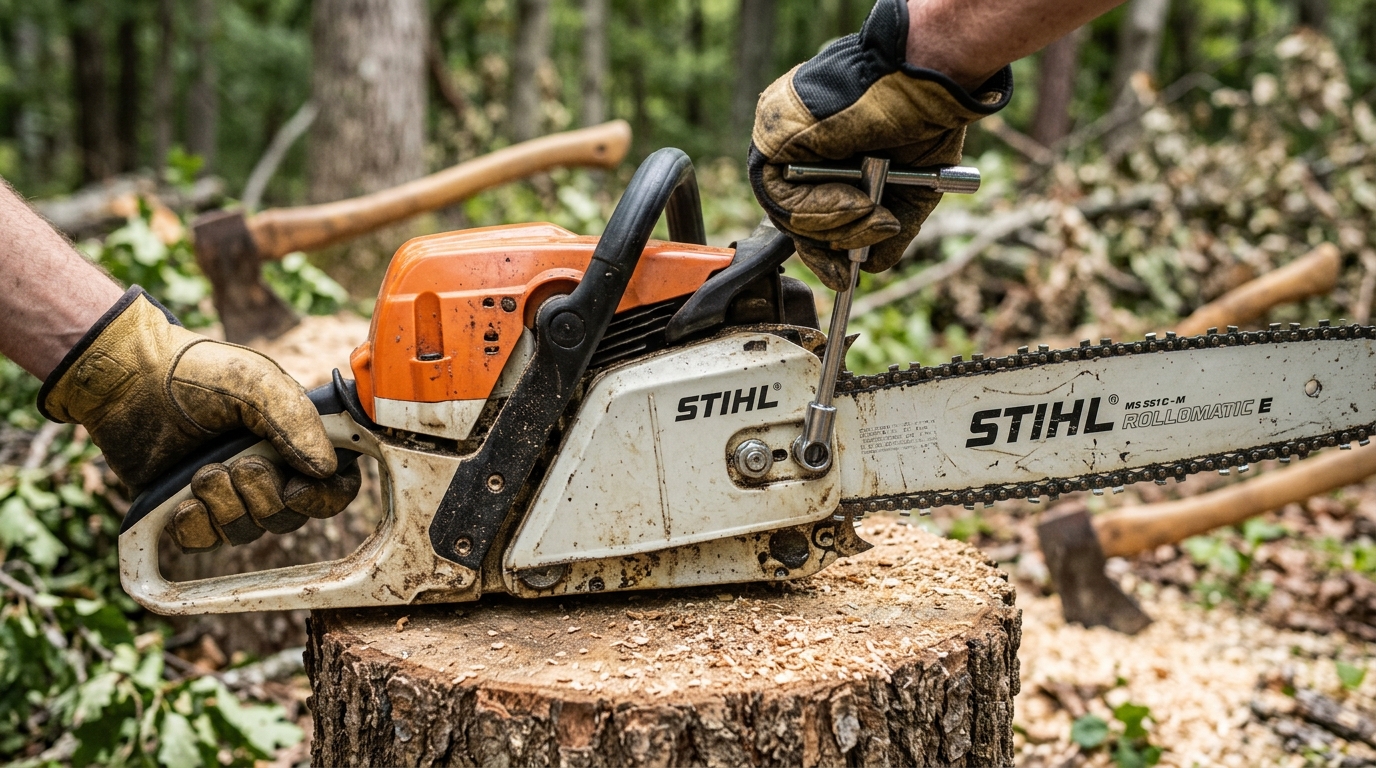
Tension matters just as much. With the engine off and the bar tip raised, the chain should snap back against the bar with light drag but still be pullable by hand. Too tight burns the bar; too loose lets the chain derail.
Overheating and Vibration Problems
An overheating saw often has a blocked cooling system. Remove the recoil starter cover and clean the cooling fins on the cylinder—sawdust packs in there and insulates the engine. Check that the air intake isn’t blocked either.
Excessive vibration usually means a bent bar, a damaged chain, or worn anti-vibration mounts. Inspect the bar for burrs along the edges and straighten or replace it. Loose or missing rubber mounts transfer engine vibration straight to your hands and should be replaced before they cause fatigue or injury.
Preventive Maintenance Checklist
- Use fresh fuel mixed at the correct ratio and add stabilizer if storing longer than a month.
- Sharpen the chain at the first sign of dulling rather than forcing a dull saw.
- Check bar oil level every fill-up and clean oil ports regularly.
- Clean or replace the air filter every few tanks of fuel.
- Inspect the spark plug and replace it at the start of each season.
- Flip the bar periodically to even out wear.
Frequently Asked Questions
Why does my chainsaw start then immediately die?
A saw that fires and stalls usually has a fuel delivery issue—a clogged carburetor jet, a stuck fuel filter, or a loose fuel line. It can also happen if the choke isn’t disengaged quickly enough after startup. Check the fuel system first and confirm the choke moves freely.
How often should I sharpen my chainsaw chain?
Sharpen whenever the saw produces dust instead of chips or requires pressure to cut. In clean wood, that might be every few tanks of fuel. In dirty or sandy wood, you may need to sharpen several times a day.
Can I use regular gasoline in a chainsaw?
Only if it’s mixed with the correct two-stroke oil at the manufacturer’s specified ratio. Straight gasoline will destroy the engine. Ethanol-free fuel is preferable because it stores better and causes fewer carburetor problems.
Why is my chainsaw chain not getting oil?
The oiler port on the bar or the oil pump may be clogged with sawdust or debris. Remove the bar and clean the oil passages with a wire or compressed air. Also confirm the oil tank has oil and the pump is functioning by running the saw briefly with the bar tip near a surface to see if oil flings off.
Is it worth repairing an older chainsaw?
If the repair is limited to wear items like the chain, spark plug, or filter, repair usually makes sense. If the piston or cylinder is scored, the cost of parts and labor may approach the price of a new saw, especially for consumer-grade models.
Conclusion
Most chainsaw problems come down to fuel, spark, air, or chain maintenance—and the fixes are usually straightforward once you know where to look. Start with the simplest checks: fresh fuel, a clean filter, a working plug, and a sharp, properly tensioned chain. Preventive maintenance prevents the majority of breakdowns and keeps your saw ready when you need it. If a repair involves internal engine damage, weigh the cost against replacement before committing.