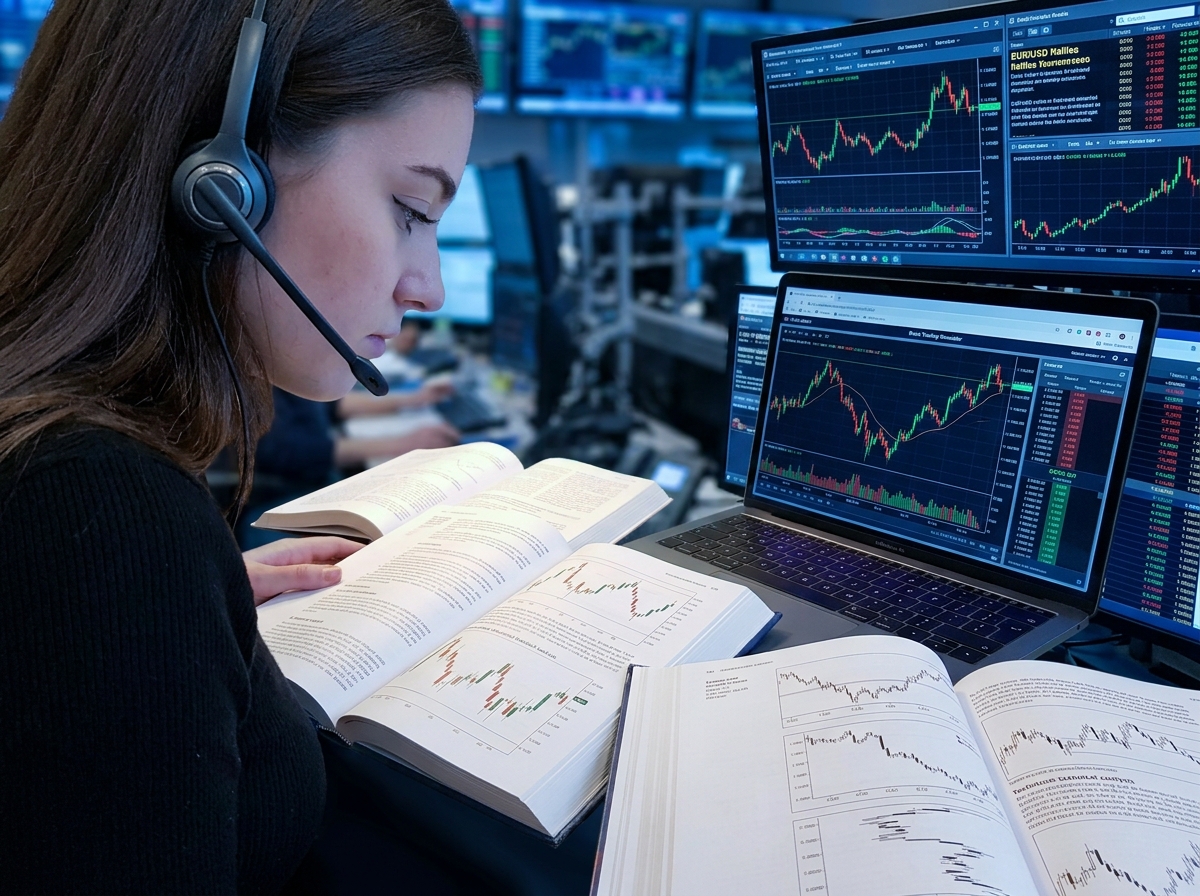
The global financial markets offer countless opportunities, but few are as dynamic and accessible as the foreign exchange market. Every day, millions of participants ranging from central banks to individual traders buy and sell currencies in response to economic developments, political events, and market sentiment. This constant activity creates an environment where learning never truly stops, making it an ideal place for traders who are committed to building long-term skills.
Success in this market rarely comes from luck or quick decisions. Instead, it grows through education, disciplined practice, and a willingness to adapt. While the potential draws many newcomers for financial returns, experienced traders understand that consistent improvement is rooted in mastering processes rather than chasing short-term outcomes.
Understanding the Foundations of the Forex Market
The foreign exchange market operates around the clock across major financial centres, making it one of the most liquid markets in the world. Unlike traditional stock exchanges with fixed trading hours, currency markets allow participants to respond to global developments almost continuously. This flexibility attracts traders with different goals, schedules, and levels of experience.
Understanding how currencies are priced is the first step toward becoming a capable trader. Exchange rates move in response to changes in supply and demand, influenced by economic reports, interest rate decisions, geopolitical events, and investor confidence. Organisations such as central banks and international financial institutions play significant roles in shaping these movements, making economic awareness an essential part of trading education.
Building a solid knowledge base also means learning the language of the market. Concepts such as currency pairs, spreads, leverage, volatility, and liquidity become easier to understand through regular study and observation. Developing familiarity with these fundamentals creates the confidence needed to interpret market conditions instead of reacting emotionally.
Building Skills Through Consistent Practice
Learning any financial skill requires repetition, and trading is no exception. Experienced professionals often emphasise the importance of treating trading as a discipline rather than a shortcut to wealth. Many educational institutions, financial experts, and respected market analysts encourage structured learning because consistency generally produces better long-term results than impulsive decision-making.
One effective approach is practising in simulated environments before risking real capital. Demo accounts allow traders to test strategies, become familiar with trading platforms, and experience different market conditions without financial consequences. This practical experience helps bridge the gap between theoretical knowledge and real-world execution.
As confidence grows, traders can gradually refine their approach by maintaining detailed records of every trade. Reviewing both successful and unsuccessful decisions helps identify recurring strengths and weaknesses. Over time, these observations become valuable lessons that contribute to better judgment and more consistent performance.
Developing a Structured Trading Plan
A well-designed trading plan provides direction during both calm and volatile market conditions. Rather than making decisions based on emotion or headlines, disciplined traders rely on predefined rules that guide entries, exits, position sizing, and risk management. This structured approach reduces uncertainty and encourages objective decision-making.
An important part of that plan is selecting a strategy that aligns with personal goals, available time, and individual risk tolerance. Some traders prefer short-term opportunities that require constant monitoring, while others focus on longer-term market trends supported by broader economic analysis. Regardless of style, consistency matters more than constantly switching between different approaches.
As traders continue improving their knowledge, many deepen their understanding of forex trading by combining technical analysis with fundamental research. Learning how price action, chart patterns, economic calendars, and market sentiment work together creates a more balanced perspective that supports thoughtful decisions instead of emotional reactions.
Managing Risk with Confidence
Risk management often separates sustainable traders from those who struggle over time. Even the most experienced market participants accept that losses are an unavoidable part of trading. The objective is not to eliminate losses but to ensure that individual setbacks never threaten long-term progress.
Simple techniques such as setting stop-loss orders, limiting position sizes, and avoiding excessive leverage help protect trading capital during unpredictable market conditions. Financial educators and industry professionals consistently emphasise these principles because preserving capital allows traders to continue learning and adapting rather than recovering from preventable mistakes.
Confidence should come from preparation instead of optimism. Traders who carefully evaluate each opportunity, understand their potential downside, and remain patient during uncertain conditions are generally better equipped to navigate changing markets. Emotional discipline becomes increasingly valuable as market volatility increases.
Conclusion
Developing trading skills is a journey built on education, patience, discipline, and continuous improvement. While the foreign exchange market offers remarkable opportunities, lasting success depends far more on preparation than on prediction. Traders who invest time in understanding market fundamentals, practising consistently, and managing risk responsibly place themselves in a stronger position to navigate changing market conditions with confidence.
Every experienced trader began as a beginner willing to learn. By building strong habits, following a structured plan, and remaining committed to ongoing development, individuals can steadily strengthen their decision-making abilities and approach the world’s most active financial market with greater knowledge, resilience, and purpose.