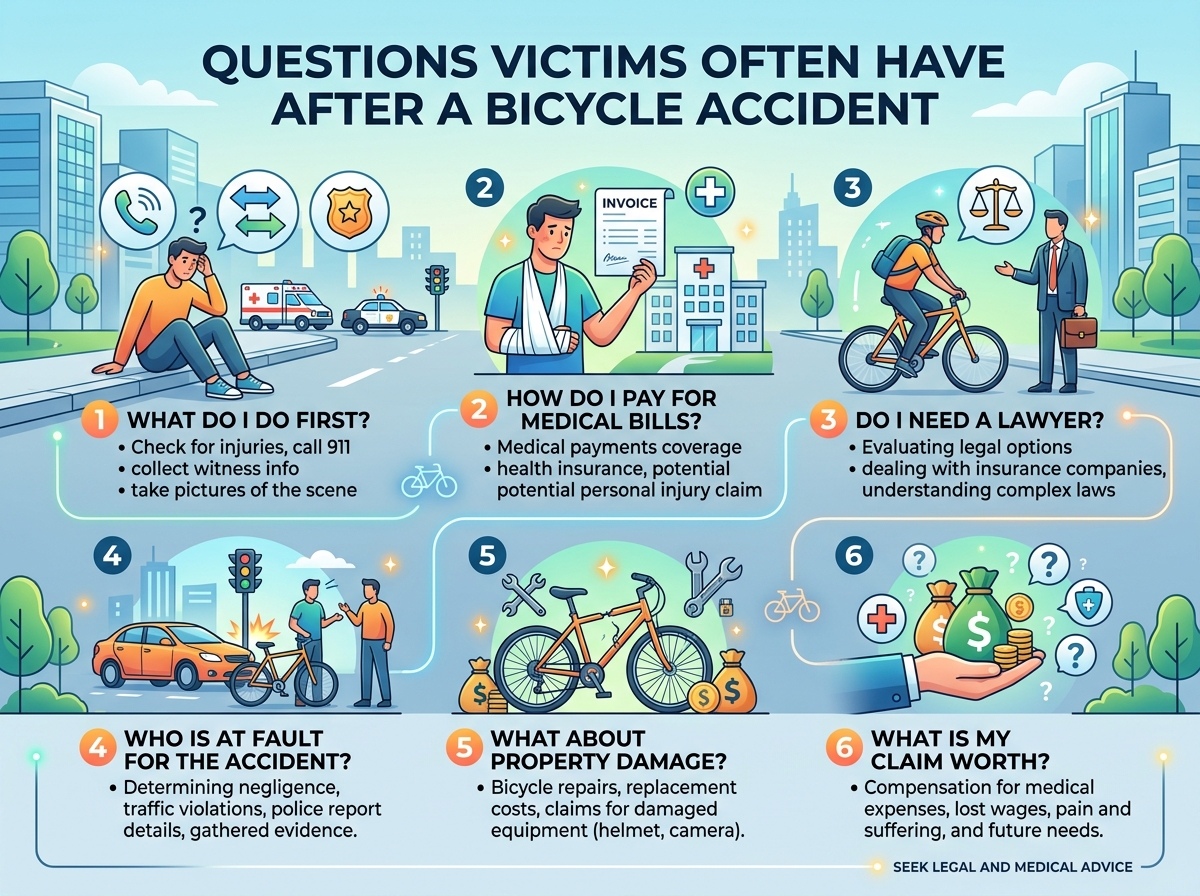
A sudden collision can leave an injured cyclist unsure what to do next or where to find reliable answers. Medical care, insurance calls, missed work, and damaged equipment may all demand attention at the same time. Understanding the issues that shape bicycle accident claims can help a rider avoid decisions that create problems later.
Should a Rider See a Doctor Even Without Severe Pain?
Adrenaline can temporarily hide injuries after a bicycle accident, allowing a person to walk, talk, or return home before symptoms become noticeable. Headaches, stiffness, dizziness, abdominal soreness, numbness, or reduced movement may develop several hours later. Prompt examination gives medical providers an opportunity to check for concussions, fractures, internal trauma, and soft-tissue damage that may not be obvious at the scene.
Follow-up care also creates a timeline connecting the bicycle crash to the rider’s condition. Insurers often question symptoms that appear later or treatment that begins after a long delay. Clear medical notes describing when pain started, how it changed, and which activities became difficult can support both recovery and a future claim.
Who May Be Responsible for the Collision?
Drivers often bear responsibility when they fail to yield, pass too closely, open a door into traffic, run a signal, or turn across an occupied bicycle lane. Fault may also extend to an employer if a delivery driver or commercial vehicle operator caused the bike accident while performing job duties.
Road agencies, construction companies, repair shops, property owners, or product manufacturers can become involved under certain circumstances. A dangerous pothole, blocked sightline, defective bicycle part, or poorly maintained work vehicle may point to responsibility beyond the individual driver. Thorough investigation helps identify every party and insurance policy that may apply.
What Evidence Should Be Saved After the Crash?
Photographs can preserve vehicle positions, bicycle damage, road markings, traffic signals, injuries, debris, skid marks, and weather conditions. Witness names, police information, medical documents, damaged clothing, helmet marks, and repair estimates may also help explain what happened and what the rider lost.
Video deserves immediate attention because nearby businesses, homes, buses, and traffic systems may overwrite recordings within days. Digital information from cycling computers, phones, navigation apps, or vehicle systems can sometimes show speed, route, braking, or timing. Early preservation gives bicycle accident cases a stronger factual base than memory alone.
Will the Insurance Company Pay Every Medical Bill?
Liability insurance may cover accident-related treatment if the insured driver caused the bicycle accident, but payment is not always immediate or complete. Adjusters can dispute fault, question whether care was necessary, challenge treatment gaps, or argue that earlier health conditions caused the symptoms.
Health insurance may pay providers while the liability claim remains under review. Reimbursement rights, deductibles, copays, policy limits, and unpaid balances can affect how much the cyclist ultimately receives. Careful review helps separate valid medical expenses from duplicate charges or unrelated amounts.
How Is a Bicycle Accident Claim Valued?
Compensation may account for emergency care, surgery, rehabilitation, prescriptions, lost wages, reduced earning ability, damaged property, and future medical needs. Serious injuries can also affect sleep, mobility, family responsibilities, recreation, and the ability to work independently.
Value depends on evidence rather than a standard formula. Medical opinions, employment records, bills, receipts, photographs, witness accounts, and documentation of daily limitations can show the full effect of the bicycle crash. Policy limits and disputed responsibility may also influence the amount available.
Should a Victim Give a Recorded Statement?
Adjusters often request recorded statements soon after a bike accident, sometimes before the rider knows the diagnosis or remembers the entire event. Pain, medication, confusion, and stress can lead to incomplete wording that the insurer later presents as a contradiction.
Brief comments may carry more weight than expected. Saying that the rider feels fine, did not see the vehicle, or might have moved unexpectedly can be used to reduce compensation without considering the complete circumstances. Understanding the purpose of the request before answering can prevent avoidable harm to the claim.
Can the Rider Recover the Cost of a Damaged Bicycle?
Property damage claims may include the bicycle, helmet, lights, clothing, cycling computer, phone, bags, glasses, and custom components. Repair shops can determine whether the frame and parts remain safe, while receipts, maintenance records, serial numbers, and earlier photographs can help establish value.
Replacement does not always mean payment for a brand-new model. Insurers may consider age, condition, depreciation, upgrades, and the cost of a comparable bicycle. Preserving the damaged equipment before repairs allows qualified professionals to inspect impact marks and hidden structural damage.
How Long Does a Bicycle Accident Case Take?
Timelines vary because medical recovery, fault disputes, evidence collection, and insurance coverage all affect progress. Settling before doctors understand the long-term outlook may leave future surgery, therapy, chronic pain, or work restrictions out of the calculation.
Delays can also arise from unavailable witnesses, medical liens, low offers, commercial policies, or disagreements about shared fault. A longer process does not always signal a problem; additional time may be necessary to document losses accurately and avoid an incomplete settlement.
What Happens if the Driver Has No Insurance?
Uninsured motorist coverage may apply through the cyclist’s own auto policy or a qualifying household policy, depending on the contract and governing law. Hit-and-run collisions may also fall within that protection when reporting and evidence requirements are met.
Coverage questions can become technical because policy definitions, exclusions, deadlines, and limits differ. Police reports, camera footage, witness statements, and written insurance denials may help prove that the other driver lacked usable coverage. A full policy review may uncover benefits that do not appear obvious on the declarations page.
Can Prior Injuries Affect the Claim?
Earlier health conditions do not automatically prevent recovery after a bicycle accident. A collision may worsen arthritis, reactivate an old back injury, increase headaches, or turn a manageable condition into one that requires new treatment.
Doctors can compare symptoms, activity levels, medication use, and medical care before and after the bicycle crash. Accurate disclosure is usually more helpful than hiding past problems, since insurers may obtain those records during the claim. The main question is whether the accident caused new harm or aggravated an existing condition.
When Should Legal Help Be Considered?
Legal review may be useful when injuries are serious, fault is disputed, several insurance policies apply, or an adjuster requests broad records and recorded statements. Bicycle accident claims can also become more complicated when commercial vehicles, government roads, defective parts, or uninsured drivers are involved.
The Lackey Law Firm can investigate the collision, preserve available evidence, review medical and insurance records, calculate financial losses, and respond to arguments that unfairly blame the cyclist. Its legal team can help bicycle accident victims understand their options and pursue compensation based on the full impact of the crash on their health, work, property, and daily life.