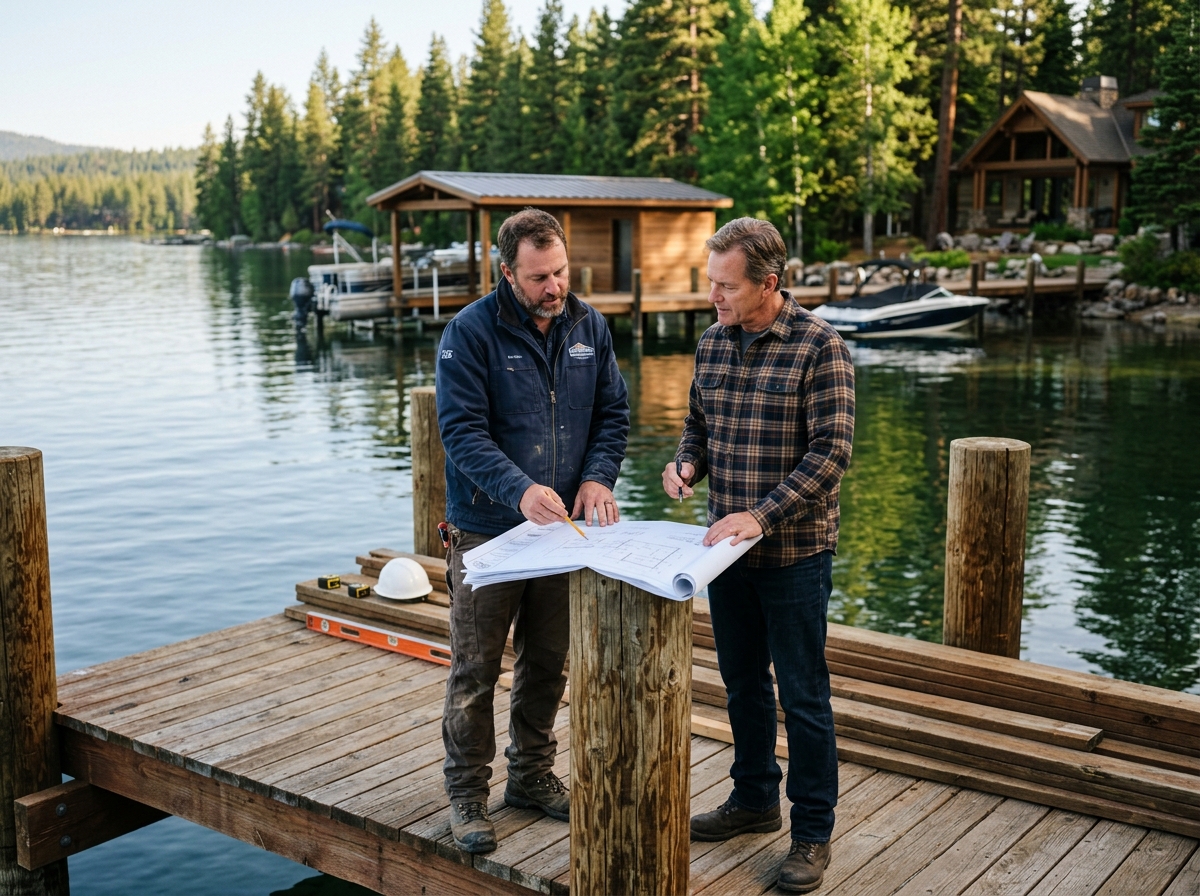
A dock layout can look simple on paper, but the details start to matter once boats, people, gear, and changing water conditions enter the picture. Before anything is finalized, property owners should talk through how the shoreline behaves, how the dock will be used, and what may change over time. A good conversation with a boat dock builder can catch layout problems before they become expensive adjustments.
Talk Through the Shoreline Shape and Available Water Depth
The shoreline sets the basic limits of the project. A gradual bank, steep drop, rocky edge, or soft bottom can all affect where the dock begins and how far it should extend.
Water depth matters just as much. The slip has to provide enough room for the boat at lower seasonal levels, not only when the lake is full. If the bottom falls away quickly, an aluminum floating dock may make more sense than a system that depends heavily on fixed supports.
Decide Where the Boat Slip and Main Walkway Should Go
Slip placement should reflect how the boat approaches the property. Wind direction, turning room, nearby docks, and underwater obstacles can all make one side of the dock easier to use than the other.
The walkway deserves separate thought. It should lead naturally from shore to the boat without forcing people around storage boxes, lift equipment, or seating. A little extra width in the right place can be more useful than adding a large platform that rarely gets used.
Ask How the Layout Will Handle Changing Water Levels
Changing water levels can alter gangway angles, boat clearance, and how far the dock sits from shore. A layout that works in spring may feel awkward later in the year.
Floating dock builders often plan around that movement by considering the expected rise and fall of the water before setting the final position. The gangway needs enough travel to stay usable, while the dock itself needs room to move without contacting the bank, rocks, or nearby structures.
Plan Enough Space for Boarding, Swimming, and Dockside Seating
A dock used for more than boat storage needs clear zones for different activities. Boarding areas should stay open so passengers can step in and out without climbing over chairs or fishing gear.
Swimming space should also be kept away from propellers, mooring lines, and boat traffic. Seating can work well on a wider section or platform, but it should not narrow the main path. Buyers comparing aluminum docks can look at the full footprint and think about how each part of the deck will actually be used.
Review Anchoring Options Before Locking In the Dock Position
Anchoring affects more than stability. Its location can influence where the dock sits, how much it moves, and how easily the layout can be adjusted later.
The right setup depends on water depth, bottom conditions, wind exposure, and wave action. Some sites may work with pilings, while others may use cables, chains, or other methods. A boat dock builder should explain how the anchoring plan fits the proposed layout instead of treating it as a separate decision.
Make Sure the Layout Leaves Room for Future Dock Add-Ons
Waterfront needs often change. A larger boat, second slip, lift, ladder, roof, or wider gathering area may become useful later.
That is where modular planning can pay off. Owners looking at aluminum boat docks for sale should ask which sections can be expanded or reconfigured. Future changes may affect flotation, anchoring, and frame connections, so it is better to leave room for them early than to rebuild around a layout that was too tight from the start.
Discuss How Wind, Waves, and Boat Traffic Could Affect the Setup
A quiet shoreline can behave very differently once afternoon wind or weekend boat traffic picks up. Wakes can push a floating dock sideways, while steady wind can make a poorly oriented slip harder to enter.
Experienced floating dock builders look at exposure before settling on dock position and orientation. They may also adjust the layout so the most vulnerable sections are not taking the full force of repeated wave action.
For owners who want the layout, access, and dock components planned as one project, Flotation Systems simplifies the process of finalizing a dock layout by offering comprehensive design services tailored to your waterfront and lifestyle. Their team collaborates with you to evaluate your specific shoreline, water depths, and boat dimensions to determine the ideal configuration. They offer total flexibility in arranging modular sections, custom walkways, and specialized slip configurations—whether you need a straightforward pier, a multi-slip layout, or a shaded roof system. By providing professional engineering guidance and precise structural planning, they ensure your final layout maximizes space, complies with local visual guidelines, and perfectly accommodates all your watercraft.