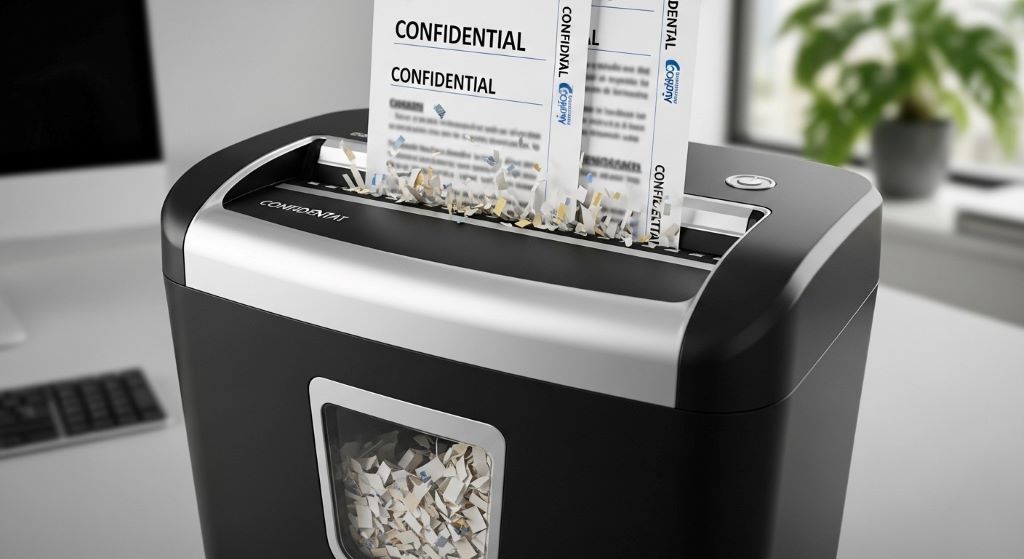
In today’s digital age, protecting sensitive information remains a critical concern for businesses of all sizes. While we often focus on cybersecurity, physical documents still pose significant risks if they fall into the wrong hands. Every office generates paperwork containing confidential data, from employee records to financial statements. Consequently, understanding how to properly dispose of these materials is essential for maintaining privacy and compliance.
Many organizations underestimate the importance of proper document disposal. Simply tossing papers into the recycling bin creates vulnerabilities that criminals can exploit. Identity thieves and corporate spies actively search through discarded materials looking for valuable information. Therefore, implementing a robust destruction process protects your business, employees, and clients from potential harm.
This comprehensive guide explores everything you need to know about selecting and using the appropriate equipment for your office needs. We’ll examine different machine types, security levels, and best practices to help you make informed decisions about protecting your sensitive information.
Understanding the Importance of Proper Document Disposal
Businesses handle countless sensitive documents daily. Financial records, contracts, customer information, and personnel files all contain data that could cause serious problems if exposed. When these materials reach the end of their retention period, they must be destroyed completely and irreversibly.
Regulatory requirements make this process non-negotiable for many industries. Healthcare providers must comply with HIPAA regulations, while financial institutions follow strict guidelines under laws like the Gramm-Leach-Bley Act. Even general businesses must adhere to privacy legislation protecting consumer information. Failure to properly dispose of confidential materials can result in hefty fines, legal action, and irreparable damage to your reputation.
Moreover, environmental responsibility plays an important role in document management. Properly processed paper can be recycled, reducing waste and supporting sustainability goals. However, this recycling must happen after documents are thoroughly destroyed to prevent information leaks.
Choosing the Right Equipment for Your Office
Selecting appropriate destruction equipment depends on several factors specific to your organization. Volume, security requirements, and available space all influence the decision-making process. Understanding these elements helps you invest in machinery that meets your needs without overspending on unnecessary features.
Assessing Your Volume Requirements
The amount of paperwork your office generates determines the capacity and durability you need. Small businesses with minimal output can manage with basic desktop models. These compact units handle occasional destruction tasks efficiently without taking up valuable office space.
Medium-sized organizations typically require heavier-duty machines. Cross-cut or micro-cut models designed for regular use can process larger volumes while maintaining security standards. Additionally, these units often include features like automatic feeders and larger waste bins to improve efficiency.
Large corporations or organizations with high-volume needs should consider industrial-grade equipment. These robust machines operate continuously, handling thousands of sheets daily. Furthermore, they often include advanced features like jam prevention, automatic oiling systems, and enhanced cooling mechanisms to prevent overheating during extended operation.
Understanding Security Levels and Cut Patterns
Different destruction methods provide varying degrees of protection. The size and shape of the resulting pieces determine how difficult reconstruction becomes. International standards classify these capabilities into specific security levels.
Strip-cut machines create long, thin strips from documents. While better than no destruction at all, this method offers minimal security. Determined individuals can potentially reassemble these strips, especially if documents contain limited text or distinctive formatting. Therefore, this option suits only non-sensitive materials like junk mail or outdated promotional materials.
Cross-cut technology significantly improves security by cutting paper both vertically and horizontally. This creates small rectangular or diamond-shaped particles that are much harder to reassemble. Most offices find this level adequate for general confidential documents like internal memos, draft reports, and routine correspondence.
Micro-cut equipment provides the highest level of security for standard office use. These machines reduce documents to tiny particles resembling confetti. Reconstruction becomes virtually impossible, making this method ideal for highly sensitive information. Financial records, legal documents, medical files, and proprietary business information all warrant this level of protection.
Additional Features to Consider
Modern destruction equipment offers various features beyond basic cutting capabilities. Automatic feed systems allow you to load multiple sheets simultaneously, saving time and reducing manual effort. This feature particularly benefits busy offices where employees need to process documents quickly between other tasks.
Jam prevention technology reduces frustration and downtime. Advanced sensors detect paper thickness and adjust cutting mechanisms accordingly. Similarly, reverse functions help clear occasional blockages without requiring manual intervention.
Safety features protect users from injury. Many machines include sensors that stop operation when the waste bin is removed or when hands approach the cutting mechanism. Additionally, thermal protection prevents overheating during extended use, extending the equipment’s lifespan.
Noise reduction matters in shared office environments. Quieter models allow document destruction without disrupting nearby workers. Some manufacturers specifically design their products for open office layouts where noise pollution affects productivity.
Implementing Effective Destruction Procedures
Owning the right equipment represents only part of the solution. Establishing clear procedures ensures consistent, secure handling of sensitive materials throughout your organization. These protocols protect your business while making the process straightforward for employees.
Creating a Document Retention Policy
Before destroying anything, you need to know what should be kept and for how long. Different document types have specific retention requirements based on legal, regulatory, and business needs. Tax records, for instance, must typically be maintained for several years, while certain contracts may require even longer retention periods.
Work with legal counsel and compliance officers to develop a comprehensive retention schedule. This document should clearly outline which materials need preservation and when they become eligible for destruction. Regular reviews ensure the policy remains current as regulations change and business needs evolve.
Communication is key to successful implementation. All employees must understand the retention policy and their responsibilities within it. Training sessions, reference guides, and accessible resources help staff make appropriate decisions about document handling.
Establishing Secure Collection Points
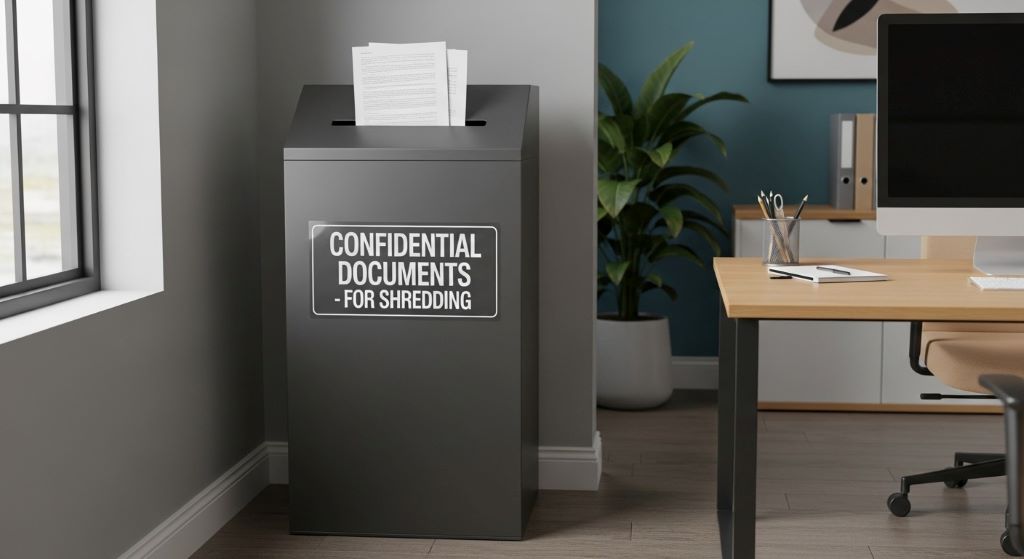
Designating specific locations for materials awaiting destruction prevents sensitive documents from sitting unattended on desks or in common areas. Locked collection bins positioned strategically throughout your facility provide convenient, secure disposal options.
These containers should be clearly labeled and easily accessible to authorized personnel. However, they must also be tamper-resistant to prevent unauthorized access. Regular collection schedules ensure bins don’t overflow, maintaining security and encouraging consistent use.
Consider the placement carefully. High-traffic areas near workstations make participation more likely, while securing bins in monitored locations adds an extra layer of protection. Balance convenience with security based on your office layout and specific risk factors.
Training Employees on Proper Practices
Your destruction program is only as strong as your team’s understanding and commitment. Comprehensive training ensures everyone recognizes sensitive information and knows how to handle it appropriately. This education should begin during onboarding and continue through regular refresher sessions.
Explain why secure document destruction matters. When employees understand the potential consequences of information breaches, they’re more likely to take procedures seriously. Real-world examples of security failures and their impacts can effectively illustrate these risks.
Provide clear instructions on what should be destroyed and how. Demonstrate proper equipment operation, including troubleshooting common issues. Additionally, establish clear reporting procedures for concerns or suspected security breaches.
Maintaining Your Equipment for Optimal Performance
Regular maintenance extends equipment life and ensures consistent operation. Neglected machines work less efficiently, jam more frequently, and may even fail completely at critical moments. Therefore, implementing a maintenance schedule protects your investment and maintains security standards.
Regular Cleaning and Lubrication
Paper dust and debris accumulate inside cutting mechanisms over time. This buildup reduces efficiency and can cause jams or damage internal components. Most manufacturers recommend regular cleaning based on usage levels. Light users might clean monthly, while high-volume operations may require weekly attention.
Follow manufacturer guidelines for cleaning procedures. Some machines feature automatic cleaning cycles, while others require manual intervention. Always disconnect power before accessing internal components to prevent injury.
Lubrication keeps cutting blades operating smoothly. Special oils designed for destruction equipment prevent buildup while protecting metal components from wear. However, using the wrong lubricant can damage machinery, so always use products recommended by the manufacturer.
Monitoring Performance and Addressing Issues
Pay attention to changes in how your equipment operates. Unusual noises, decreased cutting capacity, or frequent jams indicate potential problems requiring attention. Addressing these issues promptly prevents minor concerns from becoming major repairs.
Keep records of maintenance activities and any problems encountered. This documentation helps identify patterns and can be valuable when seeking warranty service or technical support. Additionally, these records demonstrate due diligence in maintaining security equipment for compliance purposes.
Professional Servicing and Repairs
While routine maintenance can be handled in-house, complex repairs should be left to qualified technicians. Attempting DIY fixes on sophisticated machinery may void warranties or cause additional damage. Furthermore, professionals have specialized tools and knowledge to diagnose and resolve issues efficiently.
Establish relationships with authorized service providers before problems arise. Having a trusted technician available minimizes downtime when repairs become necessary. Some providers offer maintenance contracts that include regular servicing and priority response for emergencies.
Alternative Destruction Solutions
While in-house equipment works well for many organizations, alternative solutions may better suit certain situations. Evaluating all options helps you select the most cost-effective and secure approach for your specific circumstances.
Professional Destruction Services
Third-party providers specialize in secure document destruction for businesses of all sizes. These companies collect materials from your location and destroy them at secure facilities using industrial equipment. Many provide certificates of destruction as proof that materials were properly handled.
This option eliminates equipment costs, maintenance responsibilities, and space requirements. It also offers convenience for organizations with inconsistent volume or those lacking storage for destruction machinery. However, you must carefully vet providers to ensure they meet security standards and comply with relevant regulations.
Mobile destruction services bring equipment directly to your location. You can witness the destruction process, providing additional assurance that materials are handled securely. This transparency particularly appeals to organizations with strict security requirements or sensitive materials requiring immediate destruction.
On-Site versus Off-Site Destruction
On-site destruction provides maximum control and immediate results. You maintain custody of sensitive materials throughout the process, eliminating transportation risks. This approach works well for highly confidential documents or when audit trails require witnessed destruction.
Off-site destruction typically costs less and handles larger volumes efficiently. Materials are collected in secure containers and transported to destruction facilities. While this introduces some additional risk during transportation, reputable providers use locked containers and tracked vehicles to maintain security.
Consider your specific security requirements, volume, and budget when choosing between these approaches. Some organizations use a hybrid model, destroying extremely sensitive materials on-site while using off-site services for general confidential documents.
Environmental Considerations
Responsible document destruction includes attention to environmental impact. The relationship between security and sustainability doesn’t have to be contradictory. In fact, many practices support both goals simultaneously.
Most destroyed paper can be recycled, diverting waste from landfills. However, this requires choosing equipment and methods that produce recyclable output. Certain additives used in some papers or destruction processes may contaminate recycling streams, so understanding these factors helps you make environmentally sound decisions.
Working with recycling partners who understand security requirements ensures destroyed materials are processed appropriately. These specialists handle confidential waste throughout the recycling process, maintaining security while supporting environmental goals.
Digital transformation reduces paper consumption overall, decreasing the volume requiring destruction. While not all documents can be digitized, strategic digitization efforts support both security and environmental objectives. Secure electronic storage with proper access controls can eliminate the need for paper copies in many situations.
Conclusion
Protecting sensitive information requires comprehensive attention to document lifecycle management, from creation through final destruction. Selecting appropriate equipment based on your volume, security needs, and operational requirements forms the foundation of an effective program. However, equipment alone cannot guarantee security without proper procedures, employee training, and ongoing maintenance.
Understanding different destruction methods and security levels helps you match capabilities to your specific needs. Whether you choose in-house equipment or professional services, the key is implementing consistent processes that ensure all confidential materials are destroyed completely and irreversibly. Regular evaluation of your program ensures it evolves with changing business needs and regulatory requirements.
By taking secure document destruction seriously, you protect your organization from financial loss, legal liability, and reputational damage. Simultaneously, you demonstrate commitment to privacy, compliance, and environmental responsibility. These efforts build trust with employees, customers, and partners while supporting long-term business success.
Frequently Asked Questions
What is the most secure type of office paper shredder?
Micro-cut shredders provide the highest security level for standard office use. These machines reduce documents to tiny particles that are virtually impossible to reassemble. They meet the highest security classifications and are ideal for destroying financial records, medical information, legal documents, and other highly sensitive materials.
How often should office shredders be maintained?
Maintenance frequency depends on usage levels. Light users should clean and lubricate their equipment monthly, while offices with heavy daily use may require weekly attention. Always empty waste bins before they become full, and address unusual noises or performance issues immediately to prevent damage.
Can shredded paper be recycled?
Yes, most shredded paper can be recycled. However, very small particles from micro-cut shredders may not be accepted by all recycling programs. Check with your local recycling facility to understand their requirements. Using recyclable waste bags and keeping shredded paper separate from other waste helps ensure proper processing.
What documents require secure destruction?
Any document containing personal information, financial data, medical records, legal information, or proprietary business details requires secure destruction. This includes customer records, employee files, bank statements, tax documents, contracts, and strategic business plans. When in doubt, err on the side of caution and destroy it securely.
Is it better to shred documents in-house or use a professional service?
The answer depends on your volume, security requirements, and budget. In-house shredding provides immediate control and works well for moderate volumes and highly sensitive materials. Professional services offer convenience, handle large volumes efficiently, and eliminate equipment costs. Many organizations use both approaches for different document types.
Related Topics:
The Benefits of Hiring an Oil Attorney Early On
The Significance of Document Shredding in a Company